AI vs Traditional Logic in App Development – When to Use Each

In app development, AI and traditional logic are not

competitors—they are complementary tools, and

knowing when to use each one is what separates a solid

app from a truly smart one. Traditional logic is the

foundation of every reliable application. It is built on

clear rules, conditions, and predictable outcomes.

When a feature must behave the same way every time

—such as user authentication, payments, permissions,

navigation flows, or business rules—traditional logic is

the safest and most efficient choice. It is fast,

transparent, easy to test, and easy to maintain. When

something goes wrong, developers can trace the issue

directly to a specific rule or condition and fix it with

confidence.

AI enters the picture when rules alone are no longer

enough. Many modern app features deal with

uncertainty, variation, and human behavior, which are

hard to capture with fixed logic. This is where AI

becomes valuable. Features like recommendations,

personalized content, search relevance, smart

notifications, or in-app assistants benefit from learning

patterns rather than following strict instructions. AI can

adapt over time, improve with data, and handle edge

cases that would make traditional rule-based systems

complex and brittle. Instead of asking “if this, then

that,” AI asks, “what usually works best in situations

like this?”

The mistake many teams make is treating AI as a

replacement for traditional logic. This often leads to

overcomplicated systems, unpredictable behavior, and

loss of control in critical parts of the app. A payment

flow driven by AI, for example, would be a terrible

idea. Users expect clarity, consistency, and trust in

such interactions. On the other hand, forcing

everything into rigid logic can result in apps that feel

cold, static, and out of touch with user needs. Endless

condition trees to simulate “intelligence” quickly

become hard to manage and impossible to scale.

The most effective approach is a hybrid one.

Traditional logic should form the backbone of the app,

ensuring stability, performance, and clear structure. AI

should be layered on top where flexibility and insight

genuinely add value. For example, logic defines what

content is available and what actions are allowed,

while AI helps decide which content to show first,

when to prompt the user, or how to personalize the

experience. In this setup, logic keeps the app grounded,

and AI makes it feel responsive and human.

From a product and business perspective, this balance

also reduces risk. Traditional logic is cheaper to build,

easier to audit, and simpler to explain to stakeholders.

AI requires data, monitoring, and ongoing tuning, so it

should be used deliberately, not everywhere. When

applied thoughtfully, AI enhances the app without

undermining reliability or user trust.

In the end, great app development is not about

choosing AI over traditional logic or vice versa. It is

about understanding their strengths and limitations,

and using each where it makes the most sense. Apps

built this way feel both solid and smart—predictable

where they must be, and adaptive where it truly

matters.

Adding AI to Mobile Apps: iOS, Android, and Web

Adding AI to mobile apps has become a natural next

step for teams building products across iOS, Android,

and the web. What started as simple automation has

evolved into smarter, more responsive experiences that

adapt to users in real time. Today, AI is less about

novelty and more about solving everyday problems in

ways that feel intuitive and human.

On mobile platforms like iOS and Android, AI often

works behind the scenes to make apps feel faster and

more personal. Recommendation systems learn from

user behavior to suggest relevant content, products, or

actions without requiring extra input. Voice recognition

and natural language processing allow users to interact

with apps more naturally, whether they are dictating a

message, searching for information, or controlling

features hands-free. Even small touches, such as

predictive text or smart notifications, rely on AI to

reduce friction and make daily interactions smoother.

Performance and efficiency are another major reason

developers add AI to mobile apps. AI models can

optimize battery usage, adapt image quality to network

conditions, and detect unusual behavior such as

crashes or security risks. On-device AI, which runs

directly on the user’s phone, has become especially

important. It allows apps to deliver intelligent features

while protecting privacy and reducing reliance on

constant internet access. This balance between

intelligence and efficiency is critical in mobile

environments, where resources are limited and user

expectations are high.

On the web, AI plays a slightly different role. Web

applications often focus on scale and flexibility,

serving users across many devices and contexts. AI-

powered search, chat interfaces, and personalization

engines help websites respond to diverse user needs

without becoming complex or overwhelming. For

example, an AI assistant on a web app can guide users

through onboarding, answer questions, or recommend

next steps based on their behavior. This creates a sense

of continuity between web and mobile experiences,

especially when users switch between devices.

One of the biggest challenges in adding AI across iOS,

Android, and the web is consistency. Users expect the

same level of intelligence and reliability everywhere,

even though the underlying technologies may differ.

Successful teams design AI features at the product

level first, then adapt them to each platform’s strengths.

This might mean using cloud-based AI services for

heavy processing while keeping lightweight models on

devices for responsiveness. The goal is not identical

implementation, but a consistent experience.

Despite its benefits, AI must be used thoughtfully.

Features that feel intrusive, confusing, or unreliable

can quickly erode trust. Users are more likely to accept

AI when it clearly helps them, explains itself when

needed, and respects their data. Transparency and

control are key, especially as AI becomes more

integrated into everyday tools.

In the end, adding AI to mobile apps and web

platforms is about enhancing human capability, not

replacing it. When done well, AI fades into the

background, quietly making apps more helpful,

adaptive, and enjoyable to use.

AI for Apps (Strong Fit with Your Brand)

  • AI for Apps is a natural extension of how we
  • already build mobile and web applications. Instead

  • of adding AI just because it sounds impressive, we

  • focus on using it where it genuinely improves the

  • user experience and supports real business needs.

  • This can mean smarter recommendations, helpful

  • in-app assistants, or small automations that remove

  • friction from everyday actions. The goal is simple:

  • apps that feel intuitive, adapt to users over time, and
  • quietly make things easier—without becoming

  • complex or overwhelming.

AI-Powered SEO & Content Generation for Modern Websites

AI-powered SEO and content generation tool for website optimization, keyword research, and automated content creation

AI-powered SEO and content generation have become central tools for

modern websites, changing how content is planned, written, and

optimized. What once required large teams, long research cycles, and

constant trial and error can now be done faster and more consistently

with the help of artificial intelligence. Yet the real value of these tools

is not in replacing human creativity, but in supporting it in practical

and scalable ways.

At its core, AI-powered SEO helps websites understand what people

are actually searching for and how search engines interpret content.

Instead of guessing which keywords might work, AI tools analyze

large volumes of search data, user behavior, and competitive content to

identify patterns. This allows website owners to focus on topics that

have real demand and realistic ranking potential. For a small business

or independent creator, this can level the playing field by revealing

opportunities that were previously hidden behind complex analytics.

Content generation is where AI becomes most visible. Modern AI

systems can draft blog posts, product descriptions, landing pages, and

FAQs in minutes. This speed is especially useful for websites that need

to publish regularly to stay relevant. However, the strongest results

come when AI is used as a first draft assistant rather than a final author.

A human editor can shape the tone, add real-world experience, and

ensure the message aligns with the brand. In this collaboration, AI

handles structure and efficiency, while humans provide meaning and

voice.

Another important advantage of AI-powered SEO is consistency.

Search engines reward clarity and structure, and AI tools are very good

at maintaining both. They can suggest logical headings, improve

internal linking, and ensure that content stays focused on a single topic

rather than drifting. Over time, this creates a website that is easier for

both users and search engines to navigate. Visitors benefit from clearer

answers, and search engines gain a better understanding of the site’s

purpose.

AI also helps with content maintenance, which is often overlooked.

Websites naturally age: statistics change, links break, and articles lose

relevance. AI tools can scan existing content and highlight where

updates are needed or where new content could strengthen an existing

topic cluster. This shifts SEO from a one-time effort into an ongoing,

manageable process.

Despite these strengths, AI-powered SEO has clear limits. Content that

is generated without human review can feel generic or disconnected

from real experience. Search engines are increasingly good at

recognizing shallow content that exists only to rank. More importantly,

users can sense when content lacks authenticity. Trust is built through

insight, clarity, and relevance, not just keyword coverage.

In the end, AI-powered SEO and content generation work best as quiet

partners in the background. They handle research, structure, and

optimization, freeing humans to focus on storytelling, strategy, and

genuine value. For modern websites, this balance is what turns

visibility into credibility and traffic into lasting engagement.

AI-Powered SEO & Content Generation for Modern Websites

AI-powered SEO and content generation has quietly

changed how modern websites grow, rank, and stay

relevant. Not in a flashy, “robots writing everything”

way—but in a very practical, human-friendly way that

helps teams work smarter instead of harder. Today, the

best websites don’t just publish more content; they

publish better, more targeted content, faster and with

clearer intent. This is where AI earns its place.

At its core, AI-powered SEO starts with understanding

search intent. Instead of guessing what users might be

searching for, AI tools analyze real queries, patterns,

and language people actually use. For example, a

business website might assume users search for

“enterprise solutions,” while AI reveals they’re really

typing “simple tools for small teams.” That insight

alone can completely change how a page is written—

and whether it ever gets found. AI helps bridge that

gap between what businesses want to say and what

users want to read.

Content generation is where most people first notice

AI, but the real value isn’t in pumping out generic

articles. Modern AI tools help structure content

properly: clear headings, logical flow, concise

explanations, and answers that match how people scan

pages today. A good example is a service page. Instead

of a long, unfocused block of text, AI can help break it

into short sections that explain what the service is,

who it’s for, how it works, and why it matters—exactly

the way both users and search engines prefer.

Another quiet advantage is consistency. Many websites

struggle because content is written by different people

at different times, with different tones and levels of

detail. AI helps maintain a consistent voice and

structure across blog posts, landing pages, FAQs, and

product descriptions. That consistency builds trust—

not just with search engines, but with real visitors who

feel the site is clear, reliable, and professional.

AI also improves SEO beyond writing. It can suggest

internal links, highlight missing topics, identify

outdated pages, and recommend updates based on new

search trends. Imagine a blog post written two years

ago that still gets traffic but slowly drops in rankings.

AI can flag it, suggest what’s missing, and help refresh

it without starting from scratch. This turns content into

a living asset rather than something you publish once

and forget.

What matters most is how AI is used. The strongest

results come when AI supports humans, not replaces

them. Humans bring experience, judgment, and

context. AI brings speed, pattern recognition, and

structure. Together, they create content that feels

natural, helpful, and genuinely useful—while still

being optimized for search.

In simple terms, AI-powered SEO and content

generation helps modern websites say the right things,

to the right people, in the right way, at the right

time. Not louder. Just smarter.

AI Chatbots for Websites: When They Help and When They Don’t

AI chatbots have quietly become a common feature on

modern websites. You see them in the corner of online

shops, service pages, and even personal blogs, offering

help before you’ve asked for it. When they are done

well, they can feel like a helpful assistant who is

always available. When they are done poorly, they

quickly become a source of frustration. Understanding

when AI chatbots help and when they don’t is essential

for anyone thinking about adding one to a website.

One of the clearest ways AI chatbots help is by

providing instant answers to simple, repetitive

questions. Visitors often arrive with basic needs:

opening hours, pricing ranges, shipping policies, or

how to contact support. A chatbot that is trained on the

site’s content can respond immediately, without

making users search through menus or wait for an

email reply. This is especially valuable outside

business hours, when human support is unavailable. In

these cases, the chatbot reduces workload for support

teams while improving the visitor’s experience at the

same time.

Chatbots are also useful as guides rather than problem-

solvers. On larger websites, people often feel lost. A

well-designed chatbot can ask a short clarifying

question and point users to the right page, product, or

form. For example, on a service website, it might help

a visitor understand which service fits their situation,

or on an e-commerce site, it might narrow down

product categories. Here, the chatbot’s value is not

intelligence in a human sense, but speed and clarity.

However, AI chatbots stop being helpful when they

pretend to be more capable than they are. Many

frustrations come from bots that give vague, incorrect,

or overly confident answers to complex questions.

When a user has a specific problem, an emotional

concern, or a case that requires judgment, a generic AI

response can feel dismissive or even misleading. This

is particularly risky in areas like healthcare, legal

advice, or financial decisions, where wrong guidance

can have real consequences.

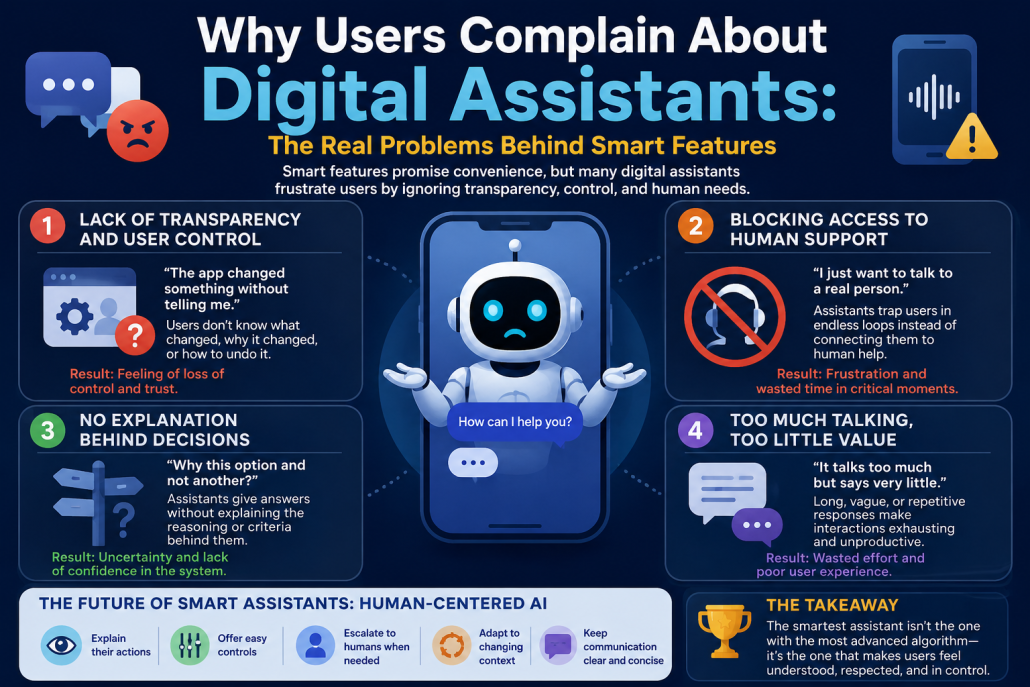
Another common failure happens when chatbots block

access to humans. If users are forced to argue with a

bot before reaching real support, trust erodes quickly.

People generally accept automation when it saves time,

but they resent it when it becomes a gatekeeper. A

good chatbot knows when to step aside and offer a

clear path to human help.

In the end, AI chatbots work best when they are

designed with humility. They should focus on

answering what they know well, guiding users gently,

and being transparent about their limits. They fail

when they try to replace human understanding instead

of supporting it. Used thoughtfully, chatbots can make

websites feel more responsive and welcoming. Used

carelessly, they remind visitors how much they miss

talking to a real person.

Core AI (Foundational)

Core AI infographic showing machine learning, natural language processing, neural networks, predictive analytics, computer vision, AI automation, and intelligent digital business solutions.

Core AI is the foundation behind modern artificial intelligence systems and intelligent digital applications. Technologies such as machine learning, natural language processing (NLP), neural networks, predictive analytics, and computer vision form the core infrastructure that powers today’s AI-powered software. These Core AI technologies allow applications to analyze data, recognize patterns, automate decisions, and interact more naturally with users.

In modern business environments, Core AI is used in AI chatbots, recommendation systems, workflow automation, customer support platforms, analytics tools, and smart assistants. Businesses increasingly rely on foundational AI systems to improve efficiency, reduce repetitive manual work, enhance customer experiences, and support faster decision-making. As AI adoption continues to grow across mobile apps, websites, backend systems, and cloud platforms, understanding Core AI becomes essential for building scalable, intelligent, and future-ready digital solutions.

Common AI Myths in Business (and What Actually Works)

Many businesses approach AI with a mix of curiosity and hesitation,

largely because of persistent myths that distort what AI really is and

how it works in practice. One of the most common myths is that AI is

only for large corporations with massive budgets and dedicated

technical teams. This belief often stops small and mid-sized businesses

before they even start. In reality, many of today’s most effective AI

solutions are lightweight, affordable, and designed to solve very

specific problems. What actually works is starting small—using AI for

a single task such as answering customer questions, summarizing

inquiries, or automating repetitive internal work.

Another widespread myth is that AI is extremely complex and difficult

to manage. While AI can be complex behind the scenes, modern AI

tools are built to be accessible to non-technical users. Businesses do

not need to understand algorithms or machine learning models to

benefit from AI. What works instead is focusing on usability. AI

solutions that integrate smoothly into existing tools—such as websites,

email systems, or apps—deliver value without adding complexity.

When AI fits naturally into daily workflows, teams are far more likely

to trust and adopt it.

Many decision-makers also believe that AI will replace human

workers, creating fear and resistance inside organizations. This myth

causes unnecessary hesitation and internal pushback. In practice, the

AI solutions that succeed are those that support people rather than

replace them. AI works best as an assistant—handling repetitive tasks,

organizing information, or offering suggestions—while humans remain

in control of decisions and relationships. For example, AI can prepare

summaries for customer support teams, but the final response still

comes from a human. This approach increases productivity without

removing the human element.

Another misconception is that AI needs perfect data to be useful.

Businesses often assume that unless their data is clean, structured, and

complete, AI projects will fail. What actually works is using the data

that already exists and improving over time. Many AI solutions deliver

value even with imperfect data, especially when the goal is

automation, pattern recognition, or assistance rather than precision

forecasting. As AI systems are used, they naturally improve through

feedback and refinement, making data quality a process rather than a

barrier.

Some businesses also think AI is a one-time setup—something you

install, configure once, and then forget. This is another myth that leads

to disappointment. In reality, AI works best when treated as a living

system. What works is monitoring performance, reviewing results, and

adjusting the system as business needs change. Markets evolve,

customer behavior shifts, and internal processes grow. AI solutions that

are reviewed and refined over time continue to deliver value, while

static ones quickly lose relevance.

Finally, there is a myth that AI must be highly advanced to be

worthwhile. Many companies chase complex features and ambitious

use cases before mastering the basics. What actually works is

simplicity. The most successful AI projects focus on clear outcomes:

saving time, reducing manual work, improving response speed, or

helping teams make better decisions. Simple AI solutions that solve

real problems consistently outperform complex systems that look

impressive but are rarely used.

In practice, successful AI adoption is not about technology—it’s about

mindset and execution. Businesses that see AI as a practical tool rather

than a magic solution are the ones that benefit most. By starting with

clear goals, choosing simple solutions, integrating AI into existing

workflows, and improving gradually, companies can turn AI from a

source of confusion into a reliable driver of efficiency and growth.

 From Idea to Real Implementation in paragraph like human

AI for businesses usually begins with an idea rooted in a real

challenge, not in technology trends. The first step is understanding

what is not working well today—where time is wasted, customers

get confused, or decisions rely too much on guesswork. At this

stage, we translate a vague idea into a clearly defined business

problem that AI can realistically solve.

Example: A company notices that customers keep asking the same

questions by email. The idea is not “use AI,” but “reduce repetitive

support work while responding faster.”

Once the goal is clear, the next step is choosing the right AI

approach. Not every problem needs advanced models or complex

systems. Sometimes a simple AI chatbot, content generator, or

automation workflow is enough. The focus is on selecting a solution

that is reliable, easy to maintain, and understandable for the team

using it.

Example: Instead of building a complex support system, a business

starts with a chatbot trained only on its FAQ and product pages to

handle common questions.

After that comes building and integrating the solution into daily

operations. This is where the idea becomes real. The AI is

connected to existing tools such as websites, apps, email systems,

or internal databases. It is tested with real scenarios to make sure

it behaves correctly and supports users instead of creating friction.

Example: The chatbot is integrated into the website and connected

to the contact form so unanswered questions are automatically

forwarded to the support team with a summary.

Finally, real implementation means continuous improvement and

long-term value. AI is not a one-time setup. After launch, we

monitor how it is used, collect feedback, and improve its accuracy

and usefulness over time. As the business grows or changes, the AI

evolves with it.

Example: As new products are added, the chatbot is updated with

fresh content, and analytics reveal which questions customers ask

most—helping the business improve both support and product

pages.

A Practical Approach to AI Solutions for Businesses

We build practical AI solutions by focusing first on real business

needs, not on trends or buzzwords. Every project starts with a clear

understanding of how your business operates day to day—where time

is lost, where decisions are delayed, and where repetitive work slows

your team down. Instead of pushing complex or unnecessary AI, we

identify the exact point where AI can make a measurable difference,

such as improving customer communication, automating internal tasks,

generating content, or turning data into clear insights.

Once the problem is clearly defined, we select the right AI approach

for the job. This may involve chatbots trained on your own content,

workflow automation connected to your existing tools, AI-assisted

content creation, or analytics systems that highlight patterns and

opportunities. Our goal is always simplicity and reliability. The

solution must be easy to use, easy to maintain, and understandable by

non-technical users inside your organization.

We then move into design and integration, making sure the AI fits

naturally into your current website, app, or internal systems. We

integrate with tools you already use—such as email, CRM, forms,

databases, or mobile apps—so the AI becomes part of your workflow

rather than an extra layer of complexity. Throughout this phase, we test

the system with real scenarios to ensure it behaves correctly, produces

useful results, and supports your business processes instead of

disrupting them.

Finally, we focus on long-term value and improvement. After

deployment, we monitor how the AI is used, gather feedback, and fine-

tune the system over time. As your business grows or changes, the AI

can be adjusted and expanded accordingly. Our approach ensures that

the AI solution delivers continuous value, reduces manual effort,

improves decision-making, and remains aligned with your business

goals—not just at launch, but well into the future.