
AI Strategy for Small Businesses: Where to Begin
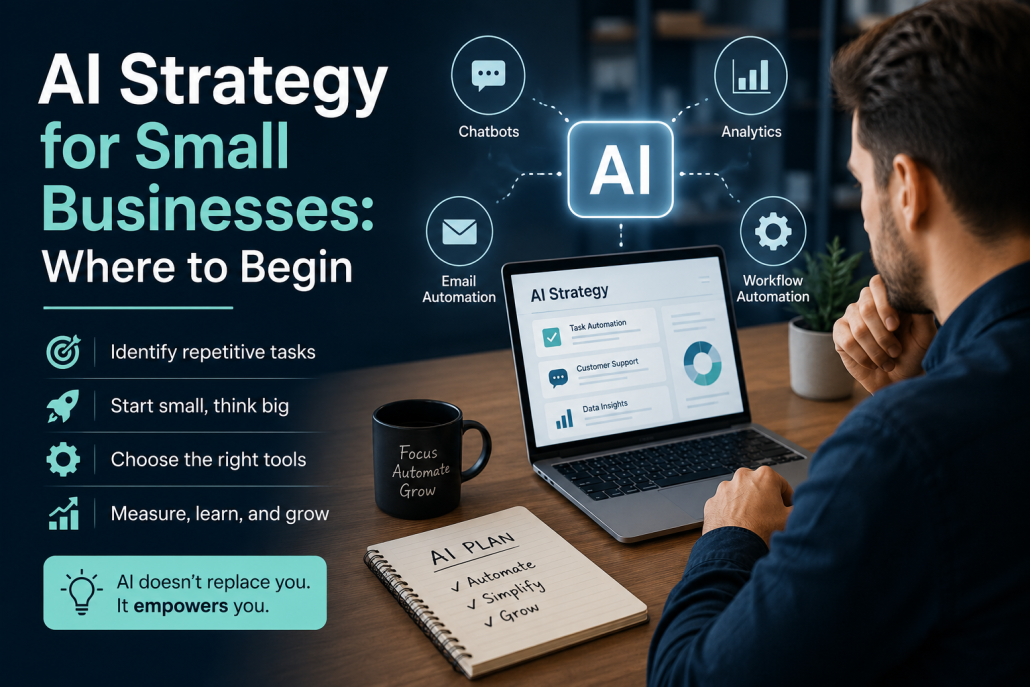
Artificial intelligence is no longer something only large companies can afford or understand. Today, small businesses can use AI to save time, improve customer service, and make better decisions. The real challenge is not whether to use AI, but where to begin.
The first step is to identify repetitive tasks. Every small business has them: answering common customer questions, managing emails, scheduling appointments, creating social media content, or organizing data. These are often the easiest places to introduce AI because they consume time but do not always require human creativity.
For example, a small online store can use AI chatbots to answer customer questions 24/7. A local marketing agency can use AI to generate content ideas or improve SEO. Even a small accounting office can use AI tools to sort invoices or summarize reports. The goal is not to replace people, but to reduce manual work.
The second step is to start small. Many businesses make the mistake of trying to automate everything at once. A better strategy is to choose one problem and solve it first. Think of it like testing a new employee: you give one task, measure the results, and expand from there.
Another important point is choosing the right tools. Platforms like OpenAI, Google Gemini
, and Zapier
offer practical solutions for businesses of all sizes.
In the end, AI strategy is less about technology and more about clarity. Small businesses should ask: What wastes our time? What slows our growth? What can be simplified? Starting with these questions makes AI practical, affordable, and powerful.