Entries by Kia

Why Product Thinking Comes First Have you ever launched a product that looked impressive… but…

Why Product Thinking Comes First Have you ever launched a product that looked impressive… but didn’t truly solve anything meaningful? Many teams move quickly into development. Features get built. Interfaces look polished. But somewhere along the way, the real problem gets lost. That’s why product thinking matters. Product thinking is a strategic mindset that starts […]

Deploying and Connecting the i9 AI Agent to WordPress   Why Users Complain About Digital…

Deploying and Connecting the i9 AI Agent to WordPress


Why Users Complain About Digital Assistants: The Real Problems Behind Smart Features

As smart applications continue to evolve, digital assistants, AI recommendations, and automation tools have become central to modern user experiences. From shopping apps to banking platforms, these intelligent features promise convenience, speed, and personalization.

But there’s a growing problem.

Based on insights from KiaApp’s analysis of smart app behavior, many users are increasingly frustrated—not because the technology is weak, but because it often fails to align with real human expectations.

The biggest complaints about digital assistants reveal one clear truth:

Intelligence without transparency creates distrust.

1. Lack of Transparency and User Control

One of the most common complaints about digital assistants is simple:

“The app changed something without telling me.”

This frustration points to a serious flaw in many AI-powered systems. Digital assistants often make decisions behind the scenes—changing settings, filtering content, triggering workflows, or saving personal preferences—without clearly explaining why.

While automation is designed to save time, hidden decisions can feel invasive.

Users want three things:


    • To know what changed

    • To know why it changed

    • To have the power to undo or adjust it

Without these controls, even advanced AI features feel unpredictable.

Why it matters:

A smart assistant should support human decisions, not replace them without permission.


2. Blocking Access to Human Support

Another major complaint sounds like this:

“I just want to talk to a real person.”

This is one of the most damaging mistakes in digital assistant design.

Instead of helping users solve problems, some assistants trap them in endless loops of automated replies, repetitive questions, and irrelevant suggestions.

This becomes especially critical in industries like:


    • Banking

    • Insurance

    • Healthcare

    • Travel

In these situations, users are often stressed and need fast, accurate human help.

When AI refuses to step aside, it stops being helpful and becomes a barrier.

Best practice:

Smart systems must know their limits and provide a clear path to human support.


3. No Explanation Behind Decisions

A major weakness in many AI assistants is the inability to explain:

“Why this option and not another?”

For example:


    • Why was this product recommended?

    • Why was this payment method selected?

    • Why did the app choose this route or schedule?

Most assistants give answers without showing the reasoning behind them.

This creates uncertainty.

If users don’t understand the logic, they can’t judge whether the recommendation matches their actual needs.

This is where trust breaks.

The solution:

AI should explain its reasoning in simple language, especially when multiple options exist.


4. Too Much Talking, Too Little Value

Another common complaint:

“It talks too much but says very little.”

Many digital assistants overload users with:


    • Long responses

    • Generic explanations

    • Repetitive instructions

    • Unclear answers

This becomes even worse when the assistant misunderstands the same question multiple times.

Instead of reducing effort, the interaction becomes exhausting.

Good digital assistants should be:


    • Fast

    • Direct

    • Context-aware

    • Easy to understand

Users value clarity more than complexity.


The Future of Smart Assistants: Human-Centered AI

The future of AI-powered apps depends on one important principle:

Respect the user’s intent.

Digital assistants should:

✔ Explain their actions
✔ Offer easy controls
✔ Escalate to humans when needed
✔ Adapt to changing context
✔ Keep communication clear and concise

The smartest assistant is not the one with the most advanced algorithm.

It’s the one that makes users feel understood, respected, and in control.

Final Thought

Smart features are no longer optional in modern apps.

But if they ignore transparency, flexibility, and human needs, they quickly become a source of frustration.

The lesson is clear:

Technology should feel like help—not like resistance.

 

Why Users Complain About Digital Assistants: The Real Problems Behind Smart Features

As smart applications continue to evolve, digital assistants, AI recommendations, and automation tools have become central to modern user experiences. From shopping apps to banking platforms, these intelligent features promise convenience, speed, and personalization.

But there’s a growing problem.

Based on insights from KiaApp’s analysis of smart app behavior, many users are increasingly frustrated—not because the technology is weak, but because it often fails to align with real human expectations.

The biggest complaints about digital assistants reveal one clear truth:

Intelligence without transparency creates distrust.

1. Lack of Transparency and User Control

One of the most common complaints about digital assistants is simple:

“The app changed something without telling me.”

This frustration points to a serious flaw in many AI-powered systems. Digital assistants often make decisions behind the scenes—changing settings, filtering content, triggering workflows, or saving personal preferences—without clearly explaining why.

While automation is designed to save time, hidden decisions can feel invasive.

Users want three things:


    • To know what changed

    • To know why it changed

    • To have the power to undo or adjust it

Without these controls, even advanced AI features feel unpredictable.

Why it matters:

A smart assistant should support human decisions, not replace them without permission.


2. Blocking Access to Human Support

Another major complaint sounds like this:

“I just want to talk to a real person.”

This is one of the most damaging mistakes in digital assistant design.

Instead of helping users solve problems, some assistants trap them in endless loops of automated replies, repetitive questions, and irrelevant suggestions.

This becomes especially critical in industries like:


    • Banking

    • Insurance

    • Healthcare

    • Travel

In these situations, users are often stressed and need fast, accurate human help.

When AI refuses to step aside, it stops being helpful and becomes a barrier.

Best practice:

Smart systems must know their limits and provide a clear path to human support.


3. No Explanation Behind Decisions

A major weakness in many AI assistants is the inability to explain:

“Why this option and not another?”

For example:


    • Why was this product recommended?

    • Why was this payment method selected?

    • Why did the app choose this route or schedule?

Most assistants give answers without showing the reasoning behind them.

This creates uncertainty.

If users don’t understand the logic, they can’t judge whether the recommendation matches their actual needs.

This is where trust breaks.

The solution:

AI should explain its reasoning in simple language, especially when multiple options exist.


4. Too Much Talking, Too Little Value

Another common complaint:

“It talks too much but says very little.”

Many digital assistants overload users with:


    • Long responses

    • Generic explanations

    • Repetitive instructions

    • Unclear answers

This becomes even worse when the assistant misunderstands the same question multiple times.

Instead of reducing effort, the interaction becomes exhausting.

Good digital assistants should be:


    • Fast

    • Direct

    • Context-aware

    • Easy to understand

Users value clarity more than complexity.


The Future of Smart Assistants: Human-Centered AI

The future of AI-powered apps depends on one important principle:

Respect the user’s intent.

Digital assistants should:

✔ Explain their actions
✔ Offer easy controls
✔ Escalate to humans when needed
✔ Adapt to changing context
✔ Keep communication clear and concise

The smartest assistant is not the one with the most advanced algorithm.

It’s the one that makes users feel understood, respected, and in control.

Final Thought

Smart features are no longer optional in modern apps.

But if they ignore transparency, flexibility, and human needs, they quickly become a source of frustration.

The lesson is clear:

Technology should feel like help—not like resistance.

Deploying and Connecting the i9 AI Agent to WordPress

Add Your Deploying and Connecting the i9 AI Agent to WordPress

I created my i9 AI Agent with Python and Google ADK. It uses MongoDB as its NoSQL database. After testing the agent on my Mac, I prepared it for uploading to my host.

First, I put all the project files in one folder and compressed the folder as a ZIP file. I did not include my API keys or passwords in the ZIP file because this information must stay private.

Next, I opened cPanel and went to File Manager. I uploaded the ZIP file to the correct folder and extracted it. Then, I configured the Python application, installed the required packages, and added the API key as an environment variable. After starting the application, my agent received a public HTTPS link.

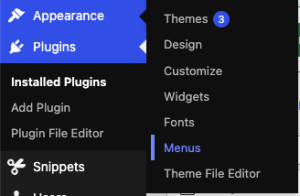
To connect the agent to my WordPress website, I entered the WordPress dashboard. Then, I went to Appearance → Menus.


WordPress dashboard showing the Appearance and Menus options

                                                                                                                                        Go to Appearance and select Menus in the WordPress dashboard.


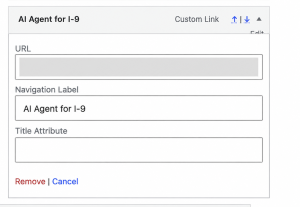
I selected Custom Links, entered the agent’s public link, and used AI Agent for i9 as the navigation label. Finally, I added it to the menu and clicked Save Menu.

Now visitors can open and use my AI shopping assistant directly from the website menu.

WordPress custom menu settings for the i9 AI Agent

Add the agent’s public URL and enter “AI Agent for i9” as the navigation label.

Add Your Heading Text Here

Explore Smarter Apps and Digital Tools

How to create a product catalog AI agent on a Mac

This guide explains how to build a store assistant like yourOwnAgent: a program that answers only from a real product list. It runs on a Mac with Python. It is not a WordPress plugin, and it is not a static HTML page.

The agent has a simple job. A customer asks about a pump, a valve, or a price. The agent searches the store catalog, then answers with names, categories, prices, and links that exist in that list. If the item is not in the catalog, it says so. It does not invent products.

What the agent is made of

Four parts work together:

  1. The brain — a Gemini model with written rules (answer only from the catalog, same language as the customer, keep replies short).

  2. Tools — small functions the brain is allowed to call, such as product search and an optional Telegram notice.

  3. The catalog — the real store data: product names, categories, prices in toman, and product URLs.

  4. Keys and settings — a Gemini API key and the path or address of the catalog. These stay in a local .env file and are never published.

Chat stays short on purpose. A search may match thousands of items. The model receives one page (for example 20 products) plus the exact total. The full list belongs in a catalog page, not in a long chat message.

What you need on a Mac

  • A Mac with internet access

  • Python 3.11 or newer

  • Gemini API key from Google AI Studio

  • A product file or a product API (JSON with names, prices, and links)

Install Apple’s command-line tools if they are not already installed:

bash

xcode-select --install

Install Homebrew, then Python:

bash

/bin/bash -c "$(curl -fsSL https://raw.githubusercontent.com/Homebrew/install/HEAD/install.sh)"
brew install python

Check:

bash

python3 --version

Create the project on a Mac

Open Terminal. Create a folder and a virtual environment:

bash

mkdir -p ~/Agents/yourOwnAgent
cd ~/Agents/yourOwnAgent
python3 -m venv .venv
source .venv/bin/activate

Install the agent libraries:

bash

pip install "google-adk[a2a]" requests python-dotenv

Create this layout:

text

yourOwnAgent/
  your_own_agent/
    __init__.py
    agent.py
    tools.py
    catalog_api.py
  .env
  .env.example
  requirements.txt

__init__.py must import the agent package so the ADK runner can find it:

python

from . import agent

Configure the Mac environment

Copy the example file and edit .env in a text editor. Put the Gemini key there. Point the catalog to a JSON file on the Mac, or to a running product API.

Example variables:

text

GOOGLE_API_KEY=your_gemini_api_key_here
GOOGLE_GENAI_USE_VERTEXAI=0
CATALOG_API_BASE_URL=http://localhost:5001
CATALOG_DB_JSON_PATH=/path/to/catalog.json

Do not upload .env to GitHub or to the website. It contains secrets.

Load the file in Terminal before every run:

bash

cd ~/Agents/yourOwnAgent
source .venv/bin/activate
set -a && source .env && set +a

Write the agent

agent.py defines the name, the model, the rules, and the tools. The rules should include:

  • Call product search before any answer about name, price, category, or stock

  • Use only rows returned by that search

  • Never invent products, prices, or brands

  • If search returns nothing, say the item is not in the list

  • Answer in the same language as the latest message (Persian or English)

  • For a budget question, wait until the customer types an amount, then search with that exact figure in toman

  • Keep the chat short; report the exact match count from the tool

tools.py exposes search (and optional Telegram) as functions the model can call.

catalog_api.py talks to the store API, or reads the local JSON if the API is down. That file is the source of truth for prices.

Run it on the Mac

From the project folder, with the virtual environment and .env loaded:

bash

adk web .

This opens a local developer chat in the browser, usually at http://127.0.0.1:8000. Ask a real catalog question, for example a pump price in Persian. The agent should call search first, then answer from those results.

If the catalog is served by a local backend, start that backend in a second Terminal window so search is not empty.

Optional commands:

bash

adk run your_own_agent
adk api_server --host=0.0.0.0 --port=8080 .

adk web is for building and testing on the Mac. adk api_server is the form used later if the agent is connected to a public website chat bubble.

How a good answer looks

For a product question, the agent should:

  1. Search the catalog once

  2. State the exact number of matches

  3. Give a short sample (name, category, price in toman, link)

  4. Direct the customer to the store site or support for a final check before purchase

It should refuse politics, coding help, other shops, and any product that is not in the list.

What this agent is not

  • It is not an HTML file to upload into WordPress. Without the Python process, there is no agent.

  • It is not a generic website chatbot that talks to Gemini with no product tool. That setup will guess and invent items.

  • It is not a page that prints the entire catalog in one message. Large results belong in a catalog view; chat only reports the total and a sample.

Checklist before you call it finished

  • Python virtual environment works on the Mac

  • .env has a valid Gemini key and is not published

  • Catalog JSON or API returns real products

  • A Persian product question returns names and prices from the list

  • An unknown item is rejected instead of invented

  • Off-topic questions are refused

That is the whole Mac workflow: install Python, create the project, write rules and a search tool, connect the store list, then run adk web and test.

Why Users Complain About Digital Assistants: The Real Problems Behind Smart Features

Frustrated user overwhelmed by digital assistant interfaces

Why Users Complain About Digital Assistants: The Real Problems Behind Smart Features

As smart applications continue to evolve, digital assistants, AI recommendations, and automation tools have become central to modern user experiences. From shopping apps to banking platforms, these intelligent features promise convenience, speed, and personalization.

But there’s a growing problem.

Based on insights from KiaApp’s analysis of smart app behavior, many users are increasingly frustrated—not because the technology is weak, but because it often fails to align with real human expectations.

The biggest complaints about digital assistants reveal one clear truth:

Intelligence without transparency creates distrust.

1. Lack of Transparency and User Control

One of the most common complaints about digital assistants is simple:

“The app changed something without telling me.”

This frustration points to a serious flaw in many AI-powered systems. Digital assistants often make decisions behind the scenes—changing settings, filtering content, triggering workflows, or saving personal preferences—without clearly explaining why.

While automation is designed to save time, hidden decisions can feel invasive.

Users want three things:


    • To know what changed

    • To know why it changed

    • To have the power to undo or adjust it

Without these controls, even advanced AI features feel unpredictable.

Why it matters:

A smart assistant should support human decisions, not replace them without permission.


2. Blocking Access to Human Support

Another major complaint sounds like this:

“I just want to talk to a real person.”

This is one of the most damaging mistakes in digital assistant design.

Instead of helping users solve problems, some assistants trap them in endless loops of automated replies, repetitive questions, and irrelevant suggestions.

This becomes especially critical in industries like:


    • Banking

    • Insurance

    • Healthcare

    • Travel

In these situations, users are often stressed and need fast, accurate human help.

When AI refuses to step aside, it stops being helpful and becomes a barrier.

Best practice:

Smart systems must know their limits and provide a clear path to human support.


3. No Explanation Behind Decisions

A major weakness in many AI assistants is the inability to explain:

“Why this option and not another?”

For example:


    • Why was this product recommended?

    • Why was this payment method selected?

    • Why did the app choose this route or schedule?

Most assistants give answers without showing the reasoning behind them.

This creates uncertainty.

If users don’t understand the logic, they can’t judge whether the recommendation matches their actual needs.

This is where trust breaks.

The solution:

AI should explain its reasoning in simple language, especially when multiple options exist.


4. Too Much Talking, Too Little Value

Another common complaint:

“It talks too much but says very little.”

Many digital assistants overload users with:


    • Long responses

    • Generic explanations

    • Repetitive instructions

    • Unclear answers

This becomes even worse when the assistant misunderstands the same question multiple times.

Instead of reducing effort, the interaction becomes exhausting.

Good digital assistants should be:


    • Fast

    • Direct

    • Context-aware

    • Easy to understand

Users value clarity more than complexity.


The Future of Smart Assistants: Human-Centered AI

The future of AI-powered apps depends on one important principle:

Respect the user’s intent.

Digital assistants should:

✔ Explain their actions
✔ Offer easy controls
✔ Escalate to humans when needed
✔ Adapt to changing context
✔ Keep communication clear and concise

The smartest assistant is not the one with the most advanced algorithm.

It’s the one that makes users feel understood, respected, and in control.

Final Thought

Smart features are no longer optional in modern apps.

But if they ignore transparency, flexibility, and human needs, they quickly become a source of frustration.

The lesson is clear:

Technology should feel like help—not like resistance.
Why Users Complain About Digital Assistants: The Real Problems Behind Smart Features

As smart applications continue to evolve, digital assistants, AI recommendations, and automation tools have become central to modern user experiences. From shopping apps to banking platforms, these intelligent features promise greater convenience, speed, and personalization.

But there is a growing problem.

Based on KiaApp’s analysis of smart application behavior, many users are becoming increasingly frustrated—not because the technology is incapable, but because it often fails to meet real human expectations.

The most common complaints about digital assistants reveal one important truth:

Intelligence without transparency creates distrust.

1. Lack of Transparency and User Control

One of the most common complaints about digital assistants is:

“The app changed something without telling me.”

This frustration highlights a serious flaw in many AI-powered systems. Digital assistants frequently make decisions behind the scenes, such as changing settings, filtering content, triggering workflows, or saving personal preferences without clearly explaining what happened or why.

Although automation is intended to save time, hidden decisions can feel intrusive and unpredictable.

What Users Expect

Users want three basic things:

  • To know what changed

  • To understand why it changed

  • To have the ability to undo or adjust the change

Without these controls, even the most advanced AI features can become difficult to trust.

Why It Matters

A smart assistant should support human decision-making, not replace it without permission. Transparency gives users confidence and helps them remain in control of their experience.

2. Blocking Access to Human Support

Another major complaint is:

“I just want to talk to a real person.”

Preventing users from reaching human support is one of the most damaging mistakes in digital assistant design.

Instead of helping people solve their problems, some assistants trap them in endless loops of automated replies, repetitive questions, and irrelevant suggestions.

Where Human Support Matters Most

The ability to reach a person is especially important in industries such as:

  • Banking

  • Insurance

  • Healthcare

  • Travel

In these situations, users may already be stressed and need fast, accurate, and personalized assistance.

When an AI assistant refuses to step aside, it stops being helpful and becomes another obstacle.

Best Practice

Smart systems must recognize their limitations and provide a clear, visible, and immediate path to human support when automation cannot resolve the issue.

3. No Explanation Behind Decisions

Many AI assistants are unable to answer a simple but important question:

“Why did you choose this option instead of another?”

For example, users may want to know:

  • Why a particular product was recommended

  • Why a specific payment method was selected

  • Why the application chose a certain route or schedule

Most assistants provide an answer or recommendation without explaining the reasoning behind it.

How This Damages Trust

When users cannot understand the logic behind a decision, they cannot determine whether the recommendation matches their actual needs.

This uncertainty weakens confidence in the system and can eventually cause users to stop relying on it.

The Solution

AI assistants should explain their reasoning in clear, simple language—especially when several options are available or when a decision could significantly affect the user.

4. Too Much Talking and Too Little Value

Another common complaint is:

“It talks too much but says very little.”

Many digital assistants overwhelm users with:

  • Long responses

  • Generic explanations

  • Repetitive instructions

  • Unclear answers

The experience becomes even more frustrating when the assistant repeatedly misunderstands the same question.

Instead of reducing effort, the interaction becomes exhausting.

What a Good Digital Assistant Should Be

An effective assistant should be:

  • Fast

  • Direct

  • Context-aware

  • Easy to understand

Users value clarity and usefulness more than unnecessary complexity.

The Future of Smart Assistants: Human-Centered AI

The future of AI-powered applications depends on one essential principle:

Respect the user’s intent.

Principles of Human-Centered AI

Digital assistants should:

  • Explain their actions

  • Provide simple and accessible controls

  • Escalate to human support when necessary

  • Adapt to changing circumstances and context

  • Keep communication clear and concise

The smartest assistant is not necessarily the one with the most advanced algorithm. It is the one that makes users feel understood, respected, and in control.

Final Thoughts

Smart features are no longer optional in modern applications. However, when they ignore transparency, flexibility, and human needs, they quickly become a source of frustration.

The lesson is clear:

Technology should feel like help—not like resistance.
How we made I-9 Agent on a Mac

A website-ready making-of: the programs on the Mac, the Python agent, the product catalog page, and how that page is shown on i-9.ir with an iframe. What you need on the Mac I-9 Agent was written and tested on macOS with this toolkit. Nothing here is a WordPress plugin. WordPress only displays the finished page. Program Why […]

Here is the command list with an additional explanation and its web-development usage:

Description: Activates the project’s isolated Python environment, so Python and pip use project-specific packages. Web-development usage: Prevents dependencies from differentPython web projects—such as Django, Flask, FastAPI, or ADK—from conflicting. Description: Displays the filesystem path of the Python executable currently being used. Web-development usage: Confirms that your terminal is using the project’s virtual-environment Python instead of […]

Google Cloud CLI (gcloud) – Essential Commands for Beginners

Google Cloud CLI (gcloud) – Essential Commands for Beginners What is gcloud? gcloud is the Google Cloud Command Line Interface (CLI). It lets you manage your Google Cloud resources directly from the Terminal instead of using the web console. You can use gcloud to: Numbered gcloud Commands 1. Check whether gcloud is installed Displays the […]

OpenClaw Security Risks: 6 Dangers of Autonomous AI Agents

OpenClaw and AI Agents: Powerful Automation with Powerful Responsibilities AI agents are rapidly becoming one of the most exciting developments in artificial intelligence. Unlike traditional chatbots that simply answer questions, AI agents can actively perform tasks on your behalf. You can ask them to browse the web, organize files, execute terminal commands, call APIs, automate […]