Building AI-Powered Apps: What Developers Need to Know

Building AI-powered apps has become one of the most exciting shifts in software development. Just a few years ago, adding artificial intelligence to an app meant working with complex machine learning models, large datasets, and deep technical expertise. Today, things are very different. Developers can integrate powerful AI capabilities into mobile, web, and desktop applications faster than ever. But while the tools have become easier, building useful AI-powered apps still requires clear thinking and the right strategy.

The first thing developers need to understand is that AI is not a product by itself—it is a feature. Many beginners make the mistake of building “an AI app” without solving a real problem. The strongest AI-powered apps start with a practical need. For example, an e-commerce app may use AI for personalized recommendations. A productivity app might summarize notes or generate tasks. A customer support app could use AI chat to answer questions instantly. The focus should always be on the user problem first.

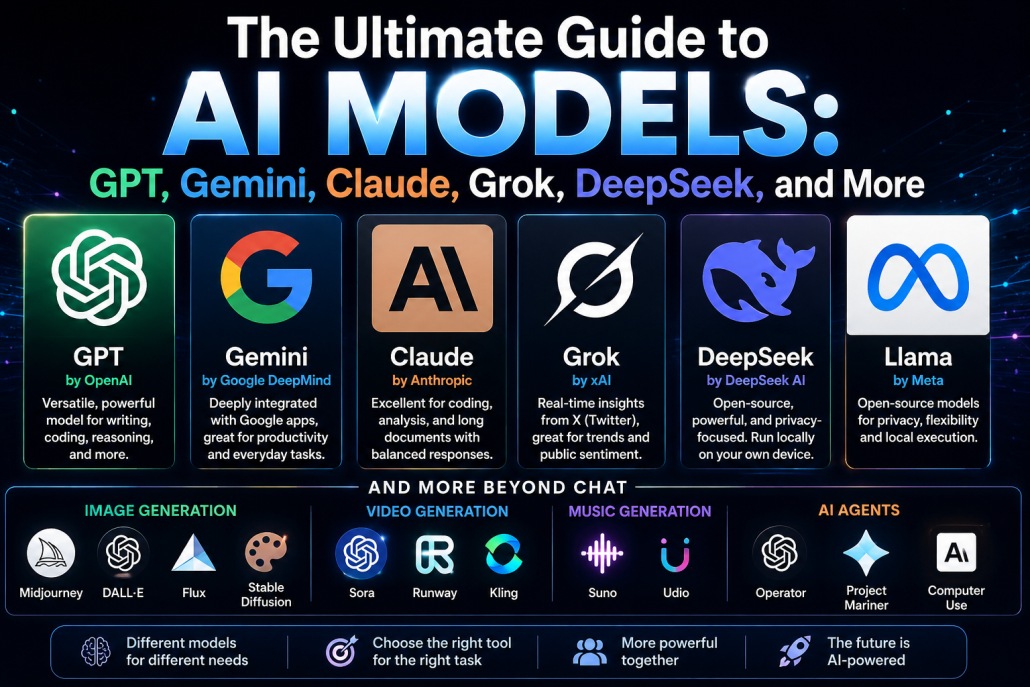
Choosing the right AI model is another major decision. Today developers have access to tools like  OpenAI⁠Attachment.tiff,  Google Gemini⁠Attachment.tiff, and  Anthropic Claude⁠Attachment.tiff. Each has strengths. Some are better for writing, some for reasoning, and some for coding assistance. The best choice depends on what the app needs. A chatbot may need strong conversation skills, while a document analyzer may need better summarization and data extraction.

Another important factor is backend architecture. AI apps often rely on APIs, which means developers must think about authentication, rate limits, cost management, and data security. For example, if your app sends every user request directly to an AI model, costs can rise quickly. A smarter backend can cache repeated responses, filter unnecessary requests, and optimize token usage.

Developers also need to design for uncertainty. Traditional apps are predictable—you click a button and expect the same result every time. AI behaves differently. Responses can vary, be incomplete, or sometimes wrong. That means UI and UX become even more important. Apps should guide users clearly, offer editing options, and avoid presenting AI output as absolute truth.

Privacy is another key issue. Many AI apps process user data, messages, or files. Developers must be transparent about what data is sent, stored, or analyzed. Strong privacy policies and secure backend systems are no longer optional.

In the end, building AI-powered apps is less about adding trendy technology and more about creating smarter user experiences. Developers who understand user needs, choose the right tools, manage costs, and build responsibly will create apps that are not only innovative, but truly valuable. AI is changing development—but the best apps will still be built on the same foundation: solving real problems well.

AI Strategy for Small Businesses

Artificial intelligence is no longer a future concept reserved for large corporations with huge budgets and technical teams. It has become a practical tool that small businesses can use today to improve efficiency, save time, and compete more effectively. Yet many small business owners still feel unsure about where to begin. The term “AI strategy” can sound overwhelming, as if it requires complex systems and expert knowledge. In reality, building an AI strategy often starts with something much simpler: understanding your daily challenges and finding the right tools to solve them.

For most small businesses, the first step is not buying software or hiring consultants. It is identifying repetitive tasks that take up too much time. These tasks often include answering customer questions, writing emails, managing bookings, creating content, organizing data, or following up with clients. While each task may seem small on its own, together they can consume hours every week. AI can reduce that workload significantly. For example, a local business can use an AI chatbot to answer common customer questions instantly, even outside working hours. This improves customer experience while allowing staff to focus on more valuable work.

Content creation is another strong starting point. Many businesses struggle to keep up with social media, blogs, newsletters, and product descriptions. AI writing tools can help generate ideas, draft content, and speed up the process. Instead of spending three hours writing a post, a business owner might spend thirty minutes editing and improving an AI-generated draft. That time saved can be invested elsewhere.

The most important part of an AI strategy is starting small. Many businesses make the mistake of trying too much too soon. They sign up for multiple tools, test too many ideas, and quickly lose focus. A better approach is to choose one problem and solve it first. Think of it like improving one department before changing the whole company. If customer support is your biggest challenge, begin there. If your marketing is inconsistent, focus on AI content tools first.

Choosing simple, no-code tools is also important. Today, many platforms are built for beginners. Tools like ChatGPT, Canva AI, and workflow automation apps allow businesses to use AI without technical skills. This removes one of the biggest barriers to entry.

In the end, AI strategy is not really about technology—it is about clarity and priorities. Small businesses that understand their problems, start with one clear goal, and use AI as a support system can create powerful long-term advantages. The best time to begin is not when everything is perfect. It is now, with small practical steps.

AI Strategy for Small Businesses: Where to Begin

Artificial intelligence is no longer something only large companies can afford or understand. Today, small businesses can use AI to save time, improve customer service, and make better decisions. The real challenge is not whether to use AI, but where to begin.

The first step is to identify repetitive tasks. Every small business has them: answering common customer questions, managing emails, scheduling appointments, creating social media content, or organizing data. These are often the easiest places to introduce AI because they consume time but do not always require human creativity.

For example, a small online store can use AI chatbots to answer customer questions 24/7. A local marketing agency can use AI to generate content ideas or improve SEO. Even a small accounting office can use AI tools to sort invoices or summarize reports. The goal is not to replace people, but to reduce manual work.

The second step is to start small. Many businesses make the mistake of trying to automate everything at once. A better strategy is to choose one problem and solve it first. Think of it like testing a new employee: you give one task, measure the results, and expand from there.

Another important point is choosing the right tools. Platforms like OpenAIAttachment.tiff, Google GeminiAttachment.tiff, and ZapierAttachment.tiff offer practical solutions for businesses of all sizes.

In the end, AI strategy is less about technology and more about clarity. Small businesses should ask: What wastes our time? What slows our growth? What can be simplified? Starting with these questions makes AI practical, affordable, and powerful.

AI + Business

Artificial Intelligence and the Future of Work: Will Jobs Disappear or Will the World Be Rebuilt?

Here’s the English presentation-style version:

Let’s go back for a moment to when we were 20 years old.

Think about that time — when we were just stepping into the real world, a world full of questions, fears, hopes, and choices.
Back then, many of us didn’t know exactly what we wanted.
And even if we did, the future didn’t change this fast.

But today?

Today, the future is moving at a speed no generation before us has truly experienced.

And the main reason for that acceleration is one thing:

Artificial Intelligence.

AI feels like a fast-forward button for human civilization.

Things that once took years can now be built in weeks.
Ideas that once required an entire company can now be executed by one person with one laptop.

Programming, design, research, analysis, content creation, education, marketing — everything is being redefined.

But the real question is not:

What can AI do?

The real question is:

What will we do in a world where AI does most of the work?


History has taught us one thing:

Jobs have always disappeared.

Once we were hunters.
Then farmers.
Then blacksmiths, weavers, factory workers, office workers, programmers.

Every wave of technology has erased jobs.

But every time, it created even more.

So the real issue is not job loss.

The real issue is the speed of change.

And AI is the fastest wave in human history.


What makes AI different from every tool before it?

The iPhone was a tool.
The internet was a network.
The steam engine was a machine.

But AI?

AI is the first tool that can think, decide, learn, and even build new tools.

That means we are no longer just building tools.

We are building the builder of builders.

And that is one of the most fundamental shifts in human history.


Should we be afraid?

Yes… and no.

Yes, because many current jobs will likely disappear:

  • Low-level programming
  • Basic content writing
  • Repetitive analysis
  • Basic customer service
  • General translation
  • Administrative work

But no, because AI does not only destroy jobs — it creates them too.

In the near future, the world may be filled with:

  • Billion-dollar one-person companies
  • Independent entrepreneurs managing teams of AI agents
  • Human experience designers
  • AI systems architects
  • AI ethics advisors
  • Digital culture creators

Who does the future belong to?

Not to those who fight AI.

But to those who collaborate with it.

In the future, knowledge alone will no longer be a competitive advantage.

Because AI will make knowledge accessible to everyone.

The true advantage will be:

  • Creativity
  • Judgment
  • Vision
  • Taste
  • Ethics
  • Leadership
  • Human connection

These are the things machines struggle to imitate.


What happens to the economy?

This may be the biggest question.

If only a few companies own the most powerful AI models, wealth will concentrate into very few hands.

And that is dangerous.

The future may move toward models like:

  • Universal Basic Income (UBI)
  • Public ownership in AI systems
  • AI dividends for everyone
  • Token-based distributed ownership economies

Because if AI becomes the infrastructure of civilization, everyone should own a part of it.


My prediction?

In the next 20 years:

AI will handle:

  • Coding
  • Research
  • Analysis
  • Automation
  • Initial production

And humans will focus more on:

  • Meaning
  • Culture
  • Innovation
  • Relationships
  • Guiding the future

Future jobs may look like leisure to us.

Just like today’s jobs would have looked strange to our ancestors.


And in the end, the most important question of the future will not be:

“What can AI do?”

It will be:

“Who benefits from what AI does?”

And the answer to that question will shape the future of our world.

AI Smart Product Recommendation: Transforming the Future of Online Shopping

In today’s competitive e-commerce world, showing the right

product to the right customer at the right time can make the

difference between a sale and a missed opportunity. This is where

AI Smart Product Recommendation becomes one of the most

powerful tools for modern online stores.

AI Smart Product Recommendation uses advanced artificial

intelligence algorithms to analyze customer behavior and product

data in order to suggest the most relevant products. Instead of

relying on random or manual recommendations, AI creates

personalized suggestions based on real shopping patterns and

product relationships.

The system mainly works using two major data sources.

The first source is customer order history. AI analyzes what

products are often bought together by customers. For example, if

many people buy a smartphone along with a protective case and

wireless earbuds, the system learns this pattern. When a new

customer views that smartphone, AI can instantly recommend

those related products. This increases the chance of upselling and

cross-selling.

The second source is product information analysis. AI scans the

product name, description, and category to find similar or relevant

products. For example, if a customer is looking at running shoes,

the AI may recommend sports socks, fitness watches, or athletic

wear based on product similarity. This creates a more intelligent

shopping journey.

One of the biggest advantages of AI Smart Product

Recommendation is its ability to generate up to 20 highly

relevant product suggestions. This gives customers more

choices without overwhelming them with unrelated products.

For online stores, the benefits are significant.

First, it improves the conversion rate. When customers see

products that match their interests, they are more likely to buy.

Instead of searching manually, they are guided toward relevant

options.

Second, it increases the average order value (AOV). Imagine a

customer adding a laptop to their cart. AI can recommend a mouse,

laptop bag, keyboard, or monitor. This often leads to bigger purchases.

Third, it improves the customer experience. Personalized

recommendations make shopping feel easier and smarter.

Customers save time and discover products they may not have

found on their own.

Fourth, it helps with inventory visibility. Sometimes great

products stay hidden because customers never reach them. AI

recommendations can bring attention to these products.

AI recommendations are also self-improving. The more customers

interact with the store, the more data the system collects. Over

time, recommendations become smarter, more accurate, and more

profitable.

This technology is already used by major platforms like Amazon,

Shopify, and SHOPLINE because it directly affects sales growth.

For businesses, AI Smart Product Recommendation is no longer

just a luxury feature — it has become a necessity. As customer

expectations grow, personalization becomes the key to staying

competitive.

In the future, AI-driven product recommendations will become

even more advanced, using behavior tracking, predictive analytics,

and real-time personalization to create highly customized

shopping experiences.

The goal is simple: understand what customers want before they

even know it themselves.

That is the true power of AI in e-commerce.

25 Essential MongoDB Terminal Commands Every Developer Should Know

MongoDB Terminal Commands Guide

1. Start MongoDB Shell

mongosh

Opens the interactive MongoDB shell and connects to the running

database server.


Allows you to execute queries, manage databases, and inspect

collections directly from the terminal.


2. Check MongoDB Version

mongod --version

Displays the installed MongoDB server version and build information.


Useful for verifying upgrades and checking compatibility with

applications.


3. Check Running Server Version

db.version()

Shows the version of the MongoDB server you are currently connected

to.


Helps confirm that Compass, applications, and the shell are using the

expected MongoDB version.


4. Show Current Database

db

Displays the name of the database currently selected in the shell.


Useful for confirming where your commands and queries will be

executed.


5. List Databases

show dbs

Shows all available databases on the connected MongoDB server.


Also displays the approximate storage size used by each database.


6. Switch Database

use <collectionName>

Changes the active database to the specified database name.


If the database does not exist, MongoDB creates it automatically when

data is added.


7. List Collections

show collections

Displays all collections inside the current database.


Collections are similar to tables in traditional SQL databases.


8. Count Documents

db.<collectionName>.countDocuments()

Counts the total number of documents in a collection.


Useful for checking data volume and verifying imports or deletions.


9. Show First 10 Documents

db.<collectionName>.find().limit(10)

Retrieves the first ten documents from a collection.


Provides a quick preview of stored data without loading the entire

collection.


10. Pretty Print Results

db.<collectionName>.find().pretty()

Formats query results in a more readable structure.


Helpful when inspecting complex JSON documents with many fields.


11. Find One Document

db.<collectionName>.findOne()

Returns a single document from the collection.


Useful for quickly examining document structure and field names.


12. Check Server Host

db.serverStatus().host

Shows the hostname of the MongoDB server you are connected to.


Helps determine whether you are connected locally or to a remote

server such as Atlas or Render.


13. Check Connection Information

db.runCommand({ connectionStatus: 1 })

Displays details about the current connection and authentication status.


Useful for troubleshooting user permissions and login issues.


14. Check Current Users

db.getUsers()

Lists all users defined in the current database.


Shows usernames, roles, and access permissions.


15. Exit MongoDB Shell

exit

Closes the MongoDB shell session safely.


Returns you to the normal terminal command prompt.


16. Check Running MongoDB Process

ps aux | grep mongod

Shows all MongoDB server processes currently running on the system.


Useful for identifying which MongoDB version and configuration are

active.


17. Check MongoDB Service Status

brew services list | grep mongo

Displays MongoDB services managed by Homebrew on macOS.


Shows whether each service is running, stopped, or reporting errors.


18. Start MongoDB 7

brew services start mongodb-community@7.0

Starts the MongoDB 7 server as a background service.


Ensures the database automatically runs and accepts connections.


19. Stop MongoDB

brew services stop mongodb-community@7.0

Stops the MongoDB service gracefully.


Useful before upgrades, maintenance, or configuration changes.


20. Restart MongoDB

brew services restart mongodb-community@7.0

Stops and starts MongoDB in a single command.


Often used after modifying configuration files or upgrading MongoDB.


21. Backup Database

mongodump --out ~/mongodb-backup

Creates a backup of all databases and collections.


Protects your data before upgrades, migrations, or major changes.


22. Restore Database

mongorestore ~/mongodb-backup

Restores databases from a previously created backup.


Useful for recovering lost data or migrating to a new MongoDB installation.


23. Most Useful Command: Open MongoDB

mongosh

Connects to MongoDB and opens the interactive shell.


The starting point for most database management and troubleshooting

tasks.


24. Most Useful Command: Verify Version

db.version()

Shows the version of the MongoDB server currently in use.


Useful for verifying upgrades and troubleshooting compatibility issues.


25. Most Useful Command: Verify Host

db.serverStatus().host

Displays the hostname of the connected MongoDB server.


Helps confirm whether you are connected to localhost, Atlas, Render,

or another remote server.

About Kia Malek Mohammadi

App & AI Consultant | Mobile Apps, Automation & Digital Solutions

Hello, I’m Kia Malek Mohammadi,

an App & AI Consultant focused on helping startups and businesses transform ideas into practical digital products.

My work combines mobile app development, artificial intelligence, business automation, and modern software architecture to create solutions that are scalable, reliable, and designed for long-term growth. Whether it is a native iOS application built with SwiftUI, a cross-platform Flutter app, AI-powered automation, or backend integration, I focus on delivering technology that solves real business problems.

My background in engineering has shaped the way I approach software development. I believe successful products are built through a combination of technical precision, structured problem-solving, and a clear understanding of business needs. Rather than simply writing code, I aim to create systems that improve efficiency, automate repetitive tasks, and help organizations operate more effectively.

Over the years, I have worked across multiple areas of technology, including mobile applications, web development, AI integration, backend services, databases, and digital transformation projects. This broad perspective allows me to connect technical implementation with business objectives and user experience.

Technology is more than a profession for me. It is a field of continuous learning, creativity, and innovation. I enjoy transforming complex challenges into simple, practical solutions that people can use every day.

At KiaApp, my goal is straightforward: build useful software, create measurable value, and help businesses grow through technology.

Core Areas of Expertise

  • Mobile App Development (SwiftUI & Flutter)
  • Artificial Intelligence Integration
  • Business Automation
  • Backend & Cloud Solutions
  • Database Design & Management
  • Startup Technology Consulting
  • Web Development & Digital Solutions

If you have an idea, a startup, or a business process that could benefit from technology, I would be happy to discuss how we can turn it into a practical solution.

AI Engine vs AI Power: Best AI Plugin for WordPress in 2026

Meow Apps is a well-known WordPress development company recognized for creating advanced artificial intelligence tools for modern websites. The company is best known for developing AI Engine, one of the most powerful AI plugins for WordPress. Meow Apps focuses on integrating modern AI technologies such as ChatGPT, Google Gemini, Claude AI, image generation, embeddings, automation, and intelligent workflows directly into WordPress websites. Its tools are designed for developers, businesses, bloggers, and website owners who want to bring artificial intelligence into content creation, customer support, SEO optimization, and website automation.

AI Engine, developed by Meow Apps, is an advanced AI plugin for WordPress that transforms websites into intelligent AI-powered platforms. The plugin supports OpenAI models like ChatGPT and GPT APIs, Google Gemini, Anthropic Claude, and several other modern AI systems. AI Engine allows users to create AI chatbots, generate SEO-friendly articles, produce AI-generated images, build custom AI forms, and automate content workflows directly inside the WordPress dashboard. One of its strongest features is support for embeddings and Retrieval-Augmented Generation (RAG), enabling websites to build intelligent knowledge bases and context-aware AI assistants. AI Engine also provides extensive developer APIs, deep WordPress integration, and support for MCP (Model Context Protocol), making it highly attractive for developers and advanced AI projects.

AI Power is another popular WordPress AI plugin that competes with AI Engine in the growing AI website ecosystem. AI Power focuses more on simplicity, beginner-friendly setup, and fast AI content creation for bloggers, marketers, and general website owners. Similar to AI Engine, it supports OpenAI, Google Gemini, and Claude AI models while offering chatbot functionality, AI content generation, and AI image creation tools. However, AI Power provides a more simplified experience with fewer advanced developer tools and less complex AI workflow customization.

When comparing AI Engine and AI Power, both plugins provide strong AI chatbot capabilities, AI-assisted content generation, AI image creation, and support for modern AI models such as ChatGPT, Gemini, and Claude. However, AI Engine stands out because of its deeper WordPress integration, advanced automation features, extensive APIs, and stronger embeddings and RAG support. This allows developers to create more intelligent and scalable AI systems directly inside WordPress websites. AI Power, on the other hand, prioritizes ease of use and simplified AI functionality, making it more suitable for users who want quick AI integration without advanced configuration.

AI Engine is generally considered the better solution for developers, AI enthusiasts, automation projects, and websites requiring advanced AI functionality. Because it provides deeper system access and more powerful automation tools, careful configuration is recommended on live production websites. AI Power is often considered safer and easier for beginners because it offers more controlled functionality with fewer advanced system-level features. Ultimately, AI Engine is ideal for advanced AI integration and custom WordPress development, while AI Power is best suited for bloggers, marketers, and users seeking simple AI-powered website tools.

AI Engine for WordPress

AI Engine WordPress plugin dashboard interface showing AI content generation, AI chatbot, SEO optimization, OpenAI integration, and AI image generation features for WordPress websites.

What if your WordPress website could automatically

write blog posts, generate AI images, create SEO titles,

summarize articles, and even chat with your visitors

like ChatGPT? Thanks to modern artificial intelligence

tools, this is now possible directly inside WordPress.

One of the most powerful plugins currently available

for this purpose is AI Engine, a feature-rich WordPress

AI plugin developed by Jordi Meow. This plugin

connects your website to OpenAI, the same technology

behind ChatGPT, and allows website owners,

bloggers, developers, and businesses to integrate

advanced AI tools into their WordPress dashboard

without complicated coding.

AI Engine is designed to make content creation and website

management faster, easier, and more efficient. After installing the

plugin from the WordPress plugin directory, you simply connect it to

your OpenAI API key. Once connected, your website gains access to a

wide range of AI-powered capabilities. For example, if you are writing

a technology blog, you can type a short prompt such as “Write an

article about WordPress SEO tips for beginners,” and AI Engine will

generate a complete article draft within seconds. This is extremely

useful for bloggers who regularly publish content and need help

overcoming writer’s block or generating new ideas quickly.

Another powerful feature of AI Engine is its AI Playground. This

section allows users to experiment with prompts, create summaries,

generate outlines, brainstorm article ideas, or rewrite content in

different styles. For instance, a digital marketer could ask the AI to

create five catchy SEO-friendly titles for a blog post, while an app

developer could generate a quick tutorial introduction for SwiftUI or

Flutter projects. Instead of spending hours brainstorming, AI Engine

helps accelerate the creative process directly inside WordPress.

One of the most impressive features is the integrated AI chatbot

system. AI Engine allows you to create a custom chatbot similar to

ChatGPT and place it anywhere on your website using a shortcode. For

example, an e-commerce website could use the chatbot to answer

product questions automatically, while a personal blog could use it to

engage visitors and recommend articles. The chatbot can be

customized to match your website’s personality, control response

length, and even limit topics. This makes it useful for customer

support, lead generation, and user engagement.

AI Engine also supports AI image generation using technologies such

as DALL·E and Stable Diffusion. Users can create images directly

inside WordPress by simply typing prompts like “modern minimalist

workspace with AI technology” or “futuristic mobile app interface.”

These generated visuals can be used as blog thumbnails, placeholders,

hero sections, or idea visualizations. Although it does not fully replace

professional design software like Photoshop, it dramatically speeds up

content production for bloggers and creators.

The plugin also includes tools for SEO optimization. Users can

generate SEO-friendly titles, meta descriptions, keywords, and

summaries directly from the editor. For example, if you publish articles

about MongoDB, AI Engine can automatically create optimized

headlines such as “MongoDB Indexing Explained for Beginners” or

“How MongoDB Improves Database Performance.” This helps

improve search engine visibility while saving time.

The Pro version of AI Engine unlocks even more advanced features,

including memory-based chatbots, prompt templates, AI assistants

trained on your own content, and deeper customization options. For

businesses and professional websites, these advanced capabilities can

significantly improve productivity and automation.

Overall, AI Engine is one of the most complete and

lightweight AI plugins available for WordPress today.

It combines AI content writing, chatbot systems, image

generation, and SEO tools into a single platform.

Whether you run a blog, a business website, an e-

commerce store, or a technology platform, AI Engine

provides a practical and modern way to integrate

artificial intelligence directly into your WordPress workflow.