App development today is not simply about writing code. It is about making the right technical decisions early, reducing unnecessary complexity, and building products that remain stable, scalable, and maintainable over time. Most businesses do not approach us asking for a specific framework. Instead, they ask a more important question:
How can we build an app that works well today and still makes sense in the future?
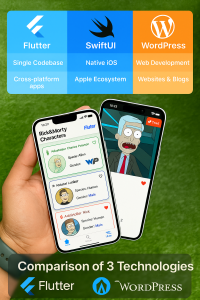
At KiaApp, we focus on modern app development approaches that balance performance, scalability, and long-term clarity. Depending on the project, this may involve native development using SwiftUI within Xcode for Apple platforms, or Flutter for cross-platform applications where speed, reach, and consistency are essential.
From Storyboards to SwiftUI
For many years, iOS applications were built using Storyboards. While effective in smaller projects, Storyboards often became difficult to manage as applications grew. Visual dependencies, layout constraints, and screen connections could quickly turn into maintenance challenges, making collaboration and long-term updates harder.
SwiftUI represents a fundamental shift away from this complexity. By describing user interfaces directly in code, SwiftUI offers a cleaner, more predictable structure. This results in faster iteration, fewer layout issues, and projects that scale far more gracefully over time—especially when working in modern versions of Xcode.
Modern Development Inside Xcode
With recent releases of Xcode, including Xcode 26.2, the development experience has evolved significantly. Developers can now integrate intelligent assistance directly into their workflow, helping them understand APIs faster, reduce repetitive tasks, and focus more on architecture and user experience.
AI-assisted tools inside Xcode are not meant to replace developers. Instead, they enhance decision-making, improve code quality, and streamline daily workflows. The result is more reliable applications and fewer issues later in the development lifecycle.
Apple Intelligence and AI-Enhanced Development
Apple Intelligence introduces a new layer to how applications are designed and improved. When combined with modern development practices, it allows apps to become more adaptive, responsive, and user-focused—while still respecting privacy and platform standards.
At the same time, tools such as OpenAI integrations can be used during development to support logic design, UI refinement, testing scenarios, and content generation. AI is no longer an external tool; it becomes a natural part of the development environment and workflow.
Flutter and Cross-Platform Advantages
Not every project requires a fully native approach. Flutter enables developers to build applications for iOS, Android, and additional platforms using a single codebase. This significantly reduces development time and cost while maintaining a high-quality and consistent user experience.
Flutter is particularly well suited for startups, MVPs, and businesses that want to reach multiple markets quickly without maintaining separate projects for each platform.
Choosing the Right Approach
There is no single best framework for every application. The right choice depends on business goals, timelines, budgets, and target audiences. Some projects benefit from deep native integration with SwiftUI, while others gain flexibility and speed from Flutter’s cross-platform architecture.
Our role is to guide this decision objectively—based on real project needs, not trends or preferences.