
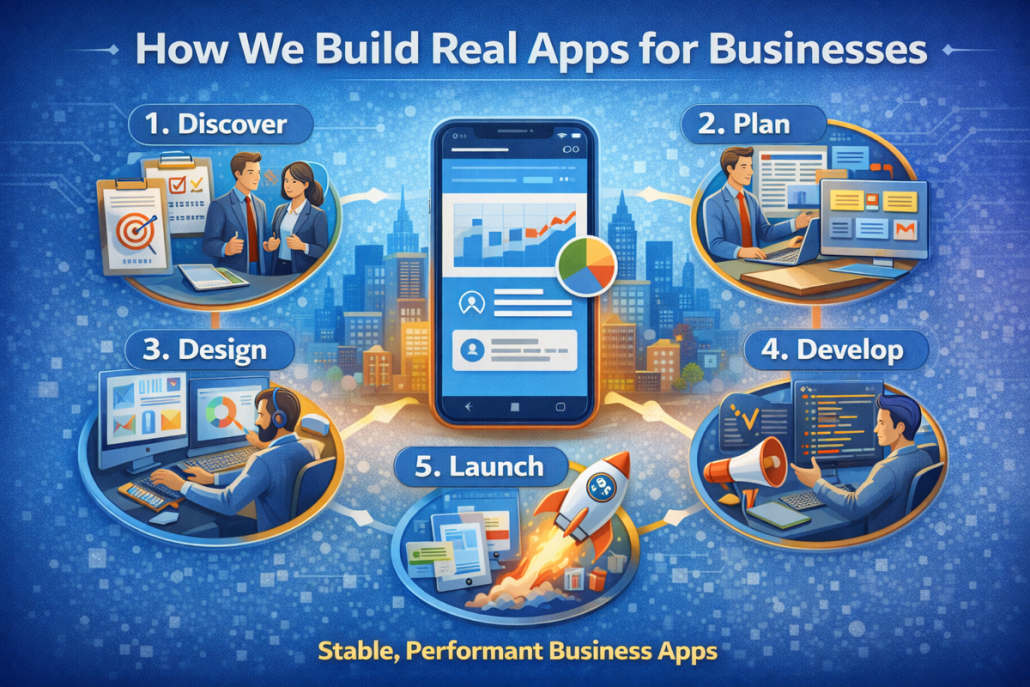
Building a real-world application is rarely a straight line. In theory, frameworks and tools promise speed and simplicity. In practice, real projects evolve through trial, mistakes, and informed decisions. This article explains how we actually build apps for businesses, based on hands-on experience—not marketing slogans.
Our focus is on stability, maintainability, and long-term value rather than short-term convenience.
Starting with CocoaPods — and Why We Moved On
Like many iOS developers, we initially started our project using CocoaPods. At the time, it felt like the standard choice. Many tutorials recommended it, and most third-party libraries provided CocoaPods support by default.
In the early phase, CocoaPods worked reasonably well. Dependencies were easy to add, and the project moved forward quickly. However, as the codebase grew, problems started to appear.
We encountered:
- Long build times
- Xcode indexing issues
- Conflicts between pod versions
- Random build failures after updates
- Increased complexity in project configuration
At some point, development slowed down—not because of business logic or design challenges, but because of dependency management issues. This is a red flag in any serious project.
The Turning Point: Removing CocoaPods
After repeated interruptions, we made a difficult but important decision: remove CocoaPods entirely.
This wasn’t a cosmetic change. It required:
- Cleaning the project setup
- Removing Podfiles and related scripts
- Refactoring imports
- Rebuilding parts of the dependency structure
It took time, but the result was immediate and noticeable.
Builds became faster.
Xcode became more stable.
Unexpected errors stopped appearing.
Most importantly, development flow returned.
Switching to Swift Package Manager (SPM)
After removing CocoaPods, we migrated to Swift Package Manager (SPM), Apple’s native dependency management solution.
SPM integrates directly into Xcode, which brings several advantages:
- No external tooling required
- Cleaner project structure
- Better compatibility with Xcode updates
- Fewer moving parts
From a business perspective, this matters. A simpler setup means:
- Easier onboarding for new developers
- Lower maintenance costs
- Fewer “mystery” bugs
SPM didn’t just improve the technical side—it improved productivity and confidence in the project.
Choosing Not to Use Alamofire
Another conscious decision was not using Alamofire.
Alamofire is a powerful networking library, but power often comes with overhead. For many business applications, native tools are more than sufficient.
We chose to rely on:
- URLSession
- Lightweight, custom networking layers
- Clear error handling
This approach has several benefits:
- Fewer external dependencies
- Better understanding of the network layer
- Easier debugging
- Long-term stability
In real business apps, simplicity often outperforms abstraction.
Our Development Philosophy
We don’t build apps to impress other developers.
We build apps to work reliably in real environments.
That means:
- Choosing boring but stable solutions
- Avoiding unnecessary libraries
- Preferring native tools when possible
- Designing for long-term maintenance
This philosophy may not look flashy, but it scales better and reduces technical debt.
How This Benefits Businesses
From a business point of view, these technical decisions translate directly into value.
1. Stability
Fewer dependencies mean fewer breaking changes. Updates are predictable and manageable.
2. Maintainability
Future developers can understand the project faster. There is less hidden complexity.
3. Cost Efficiency
Less time spent fixing tooling issues means more time spent delivering features.
4. Longevity
Native tools like Swift Package Manager are supported directly by Apple, reducing long-term risk.
Real Experience Over Theory
Many development articles describe “best practices” in abstract terms. Our approach is shaped by what actually happened in a real project.
We experienced:
- Tooling choices slowing development
- Dependency issues blocking progress
- Improvements after simplifying the stack
These lessons were learned through practice, not assumptions.
When This Approach Makes Sense
This way of working is especially suitable for:
- Business apps
- Long-term products
- Teams that value stability
- Projects with ongoing maintenance needs
It may not be ideal for rapid prototypes or experimental apps—but for production software, it pays off.
Final Thoughts
Real app development is not about chasing trends. It’s about making decisions that keep the project healthy months and years later.
By moving away from CocoaPods, adopting Swift Package Manager, and reducing unnecessary dependencies, we created a development environment that supports real business needs.
That’s how we build real apps—not by following hype, but by learning from experience.