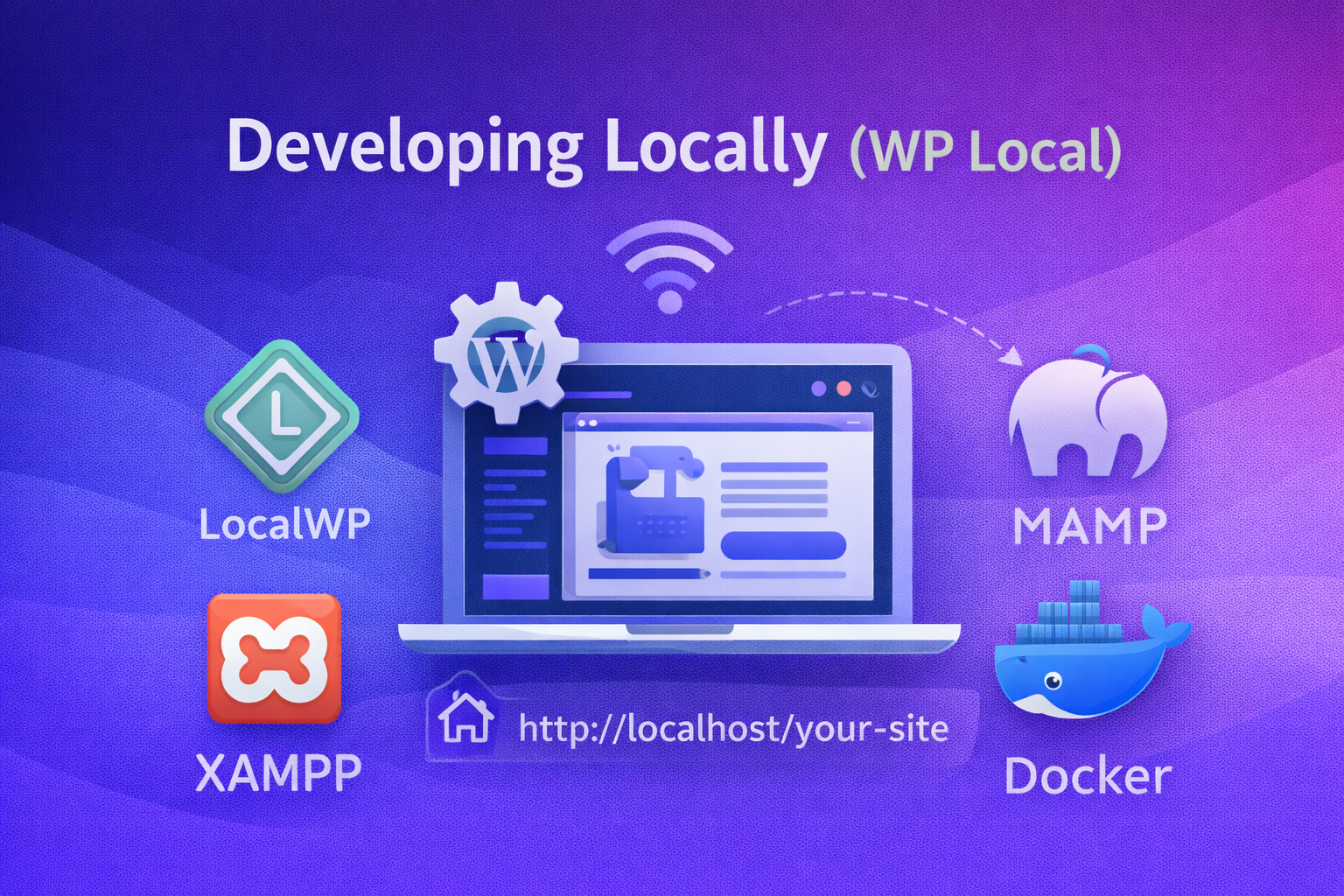
Developing locally means running WordPress directly on your own computer instead of on a live server. Whether you are using a Mac, a Windows PC, or a Linux machine, tools such as LocalWP, MAMP, XAMPP, or Docker allow you to create a complete WordPress environment that works entirely offline. In simple terms, this setup lets you build, design, and test a website freely, without touching a real domain or worrying that visitors might see unfinished or broken pages.
A useful way to think about local development is to imagine your computer as a private sandbox for WordPress. Everything you do stays hidden from the public, and no experiment—successful or not—can damage a live website or business.
2- HOW IT WORKS
Local development tools handle all the technical requirements WordPress needs behind the scenes. They install PHP, set up a database such as MySQL, and configure a web server like Apache or Nginx. Once everything is ready, WordPress runs on a local address such as http://localhost/your-site, which only you can access.
From there, working locally feels almost identical to working on a live website. You can install themes, activate plugins, create pages, adjust layouts, and even build custom plugins or templates. The WordPress dashboard, editor, and settings behave exactly the same as they would on real hosting.
When the site looks right and works as expected, you move it to a live server. Tools like LocalWP’s export feature, All-in-One WP Migration, or Duplicator make this process simple by packaging the entire site and transferring it to your hosting provider.
Example: You might spend several weeks designing a company website locally—building the homepage, adding service pages, and testing different layouts. Only when everything is polished and approved do you upload the site and make it public.
3- ADVANTAGES OF LOCAL DEVELOPMENT
One of the biggest advantages of local development is safety. Because everything happens on your own machine, mistakes never affect real visitors. You can break layouts, test unstable plugins, or delete content without any real consequences.
Local development is also much faster. There are no upload delays, no slow servers, and no dependence on an internet connection. Pages load instantly, which makes designing, testing, and iterating far more efficient.
Another major benefit is the ability to work offline. You can continue developing on a plane, a train, or anywhere without Wi-Fi. This is especially helpful for freelancers and remote developers who need flexibility.
Testing becomes easier as well. You can try new themes, experiment with plugins, or switch PHP versions without worrying about downtime. If something goes wrong, you can reset or restore the site in seconds. Local environments also work very well with version control systems like Git, supporting clean workflows and reliable code history.
4- DISADVANTAGES TO KEEP IN MIND
The main drawback of local development is that migration is unavoidable. At some point, the site must be moved from your computer to live hosting, which adds an extra step to the process.
Another challenge can be environment differences. Your local PHP or MySQL versions may not perfectly match your hosting provider’s setup, which can lead to small issues after migration.
Some features also do not behave realistically by default. Email sending, payment gateways, and webhooks often require extra configuration or final testing on a staging or live server. Collaboration can be more difficult as well, since other people cannot see your local site unless you share it using tools like LocalWP Live Links or services such as Ngrok.
5- BEST PRACTICES
For most users, LocalWP is the easiest and fastest way to start developing locally. Try to match your local PHP and database versions with those used by your hosting provider to avoid surprises later.
Before going live, always test the site again on the server, especially forms, emails, and payment features. Creating backups before migrating is essential, so you can quickly recover if something goes wrong.
Example: A common workflow is to upload the site to a staging environment first, test everything under real server conditions, and only then push it live. Following these practices keeps your development process safe, efficient, and professional.

 1- DEVELOPING LOCALLY (WP LOCAL)