
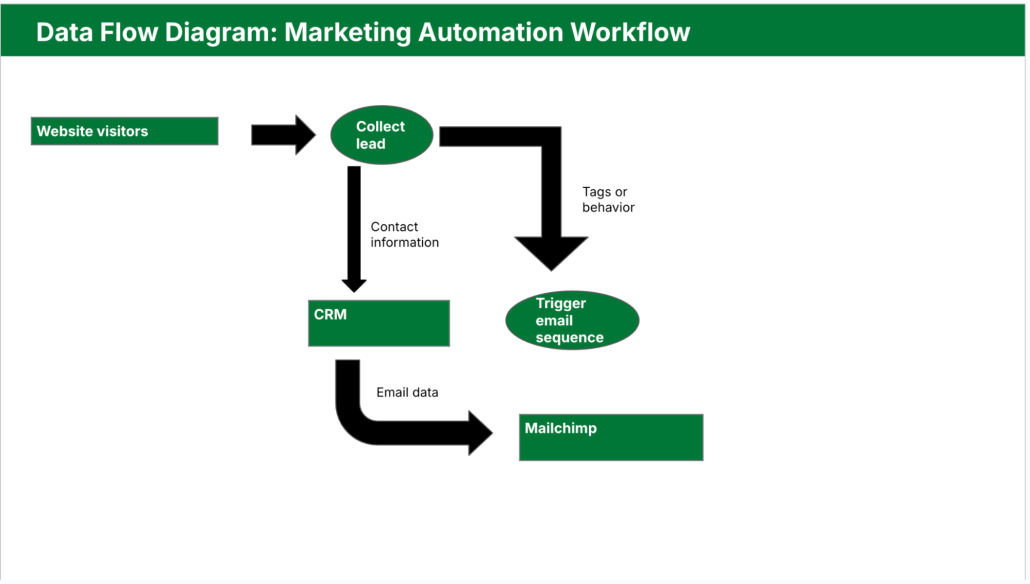
Building AI workflows with forms, email, and CRM is
about connecting the tools businesses already use into
a single, intelligent flow that runs smoothly in the
background. In many organizations, these systems
exist side by side but are not truly connected. A form
submission arrives in an inbox, someone reads it,
copies the details into a CRM, sends a reply, and
maybe creates a follow-up task. Each step is simple,
but together they consume time, introduce delays, and
leave room for errors. AI workflows are designed to
remove this manual glue work and replace it with a
process that is fast, consistent, and reliable.
At the heart of these workflows is the form, which acts
as the entry point for customers, leads, or internal
requests. AI can analyze form submissions the moment
they arrive, understand the intent behind the input, and
extract the information that actually matters. Instead of
treating every submission the same way, the system
can classify requests, detect urgency, and identify
missing or unclear details. This allows the workflow to
respond appropriately, whether that means triggering
an automatic email, creating a CRM record, or routing
the request to the right team.
Email plays a key role as the communication layer.
With AI in place, emails no longer have to be generic
or manually written. Responses can be tailored based
on the content of the form, the customer’s history, or
the stage of the relationship stored in the CRM. AI can
draft clear, context-aware messages, choose the right
tone, and send them at the right moment. It can also
monitor incoming replies, understand their meaning,
and decide whether to continue the automated flow or
hand the conversation over to a human.
The CRM acts as the system of record, bringing
structure and visibility to the entire process. AI
workflows ensure that every interaction is logged
automatically and consistently. Contact details,
conversation history, and next actions are updated
without manual input, keeping the CRM accurate and
useful. Over time, AI can also analyze this data to
identify patterns, such as which types of inquiries
convert best, where follow-ups are delayed, or which
messages lead to faster responses.
One of the biggest advantages of combining AI with
forms, email, and CRM is that the workflow becomes
adaptive. As the system processes more interactions, it
can improve how requests are categorized, how emails
are phrased, and how tasks are prioritized. This makes
the workflow more effective without requiring constant
manual tuning. Teams spend less time managing
processes and more time acting on meaningful
information.
Ultimately, building AI workflows around forms,
email, and CRM is not about adding complexity. It is
about creating a seamless experience for both
customers and teams. The right information reaches the
right place at the right time, communication feels
timely and relevant, and the business operates more
smoothly. When done well, these workflows are almost
invisible, yet they quietly remove friction, improve
efficiency, and support better relationships at scale.