
AI-Powered SEO & Content Generation for Modern Websites
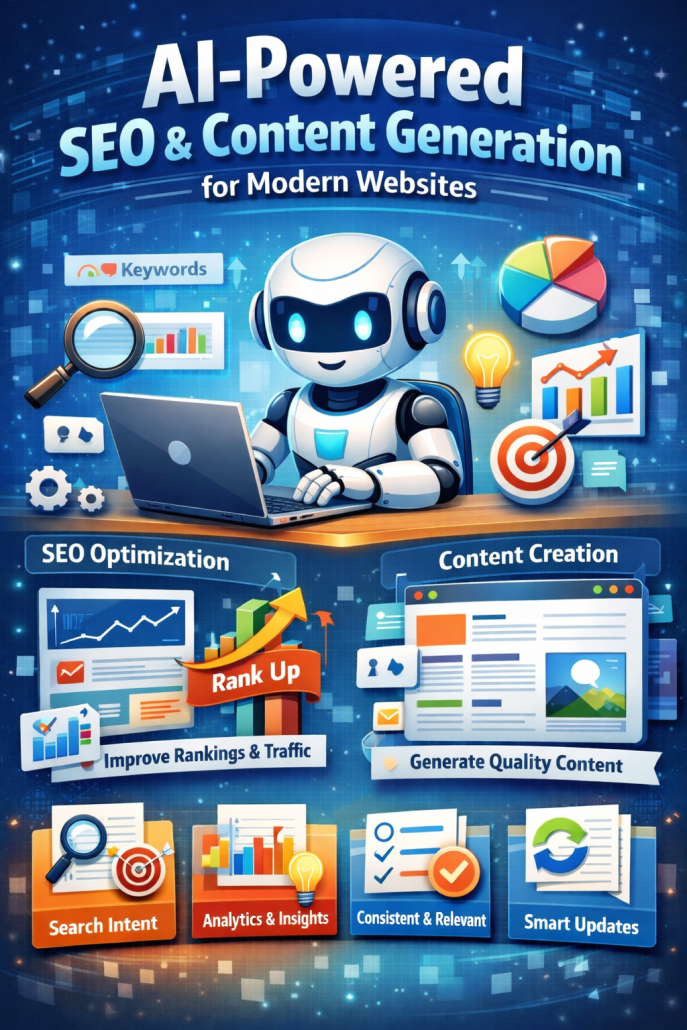
AI-powered SEO and content generation have become central tools for
modern websites, changing how content is planned, written, and
optimized. What once required large teams, long research cycles, and
constant trial and error can now be done faster and more consistently
with the help of artificial intelligence. Yet the real value of these tools
is not in replacing human creativity, but in supporting it in practical
and scalable ways.
At its core, AI-powered SEO helps websites understand what people
are actually searching for and how search engines interpret content.
Instead of guessing which keywords might work, AI tools analyze
large volumes of search data, user behavior, and competitive content to
identify patterns. This allows website owners to focus on topics that
have real demand and realistic ranking potential. For a small business
or independent creator, this can level the playing field by revealing
opportunities that were previously hidden behind complex analytics.
Content generation is where AI becomes most visible. Modern AI
systems can draft blog posts, product descriptions, landing pages, and
FAQs in minutes. This speed is especially useful for websites that need
to publish regularly to stay relevant. However, the strongest results
come when AI is used as a first draft assistant rather than a final author.
A human editor can shape the tone, add real-world experience, and
ensure the message aligns with the brand. In this collaboration, AI
handles structure and efficiency, while humans provide meaning and
voice.
Another important advantage of AI-powered SEO is consistency.
Search engines reward clarity and structure, and AI tools are very good
at maintaining both. They can suggest logical headings, improve
internal linking, and ensure that content stays focused on a single topic
rather than drifting. Over time, this creates a website that is easier for
both users and search engines to navigate. Visitors benefit from clearer
answers, and search engines gain a better understanding of the site’s
purpose.
AI also helps with content maintenance, which is often overlooked.
Websites naturally age: statistics change, links break, and articles lose
relevance. AI tools can scan existing content and highlight where
updates are needed or where new content could strengthen an existing
topic cluster. This shifts SEO from a one-time effort into an ongoing,
manageable process.
Despite these strengths, AI-powered SEO has clear limits. Content that
is generated without human review can feel generic or disconnected
from real experience. Search engines are increasingly good at
recognizing shallow content that exists only to rank. More importantly,
users can sense when content lacks authenticity. Trust is built through
insight, clarity, and relevance, not just keyword coverage.
In the end, AI-powered SEO and content generation work best as quiet
partners in the background. They handle research, structure, and
optimization, freeing humans to focus on storytelling, strategy, and
genuine value. For modern websites, this balance is what turns
visibility into credibility and traffic into lasting engagement.